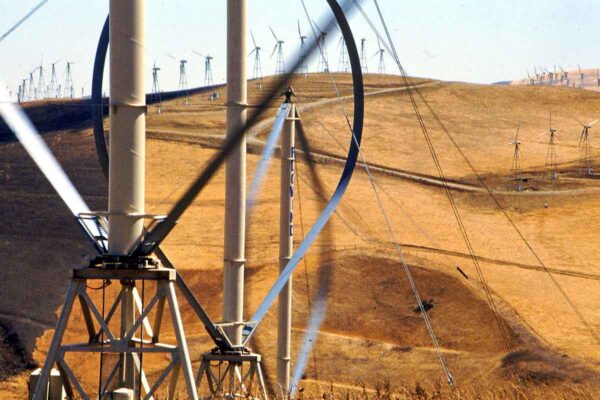
Yet perceptions of windmills have not been uniformly idyllic. Since they first appeared on the landscape of medieval Europe, windmills represented an imposition of the technological on the pastoral. They were, in the phrase of the wind energy author Paul Gipe, ‘machines in the garden’, straddling the boundary of the agrarian and mechanical.
History of Wind Power
This 30,000 word glossary was written by Paul Gipe and Bill Canter in the late-1990s. I’ve added the glossary to my web site for both its historical content—many of the terms were in use during the 1980s and 1990s—and as a reference for the thousands of newcomers to the wind industry since it was first published.
Yes it is. Back in 2022 I wrote two articles on solar and wind-powered EVs. The former I said held … Read more
When James Blyth created what many believe was the world’s first wind turbine in 1887, villagers dismissed it as the “work of the devil”.
The huge structure at Blyth’s family home in the Aberdeenshire village of Marykirk was built with four cloth sails and generated enough power to light 10 bulbs along with a small lathe.
It is said that he offered to light the streets of the village with his electricity but the offer was shunned.
Blyth’s vision of a future powered by wind only started to be realised many decades after his death
Because of my critical articles on Vertical-Axis Wind Turbines, Wind Harvest’s Kevin Wolf contacted me with background on what failed … Read more
I fell down another rabbit hole when Klaus Rockenbauer at Global-Windphotos posted images of a group of mystery wind turbines … Read more
During the heyday of the Great California Wind Rush in the early to mid 1980s, there were a handful of … Read more
“The turbine ran until March 26 when it threw a blade at 3.10 am. During this time it generated 61,780 … Read more
In recent correspondence with colleagues, I noted the unfortunate reoccurrence of the term “wind parks” to describe wind farms or … Read more