Articles by
External Source

The Heat Is On: And the cost of climate change is getting serious
By
External Source
Last Friday extreme heat forced early closure of Donald Trump’s Great American State Fair. Fortunately, the fair was sparsely attended. As some wags put it, tens of people had to be evacuated from the National Mall. Even so, 44 people received health assistance and 11 were taken to hospitals due to the heat.
OK, shutting down Trump’s shabby, dreary exercise in self-aggrandizement was no great loss. Yet the disruption of Trump’s festivities is a harbinger of many disruptions to come. The brutal heat wave in the northeastern US — an event that would have been “virtually impossible” without climate change — followed an even more brutal heat wave in Europe.
The ‘Guerrilla Solar’ Era Has Arrived, and Here’s What to Know
By
External Source
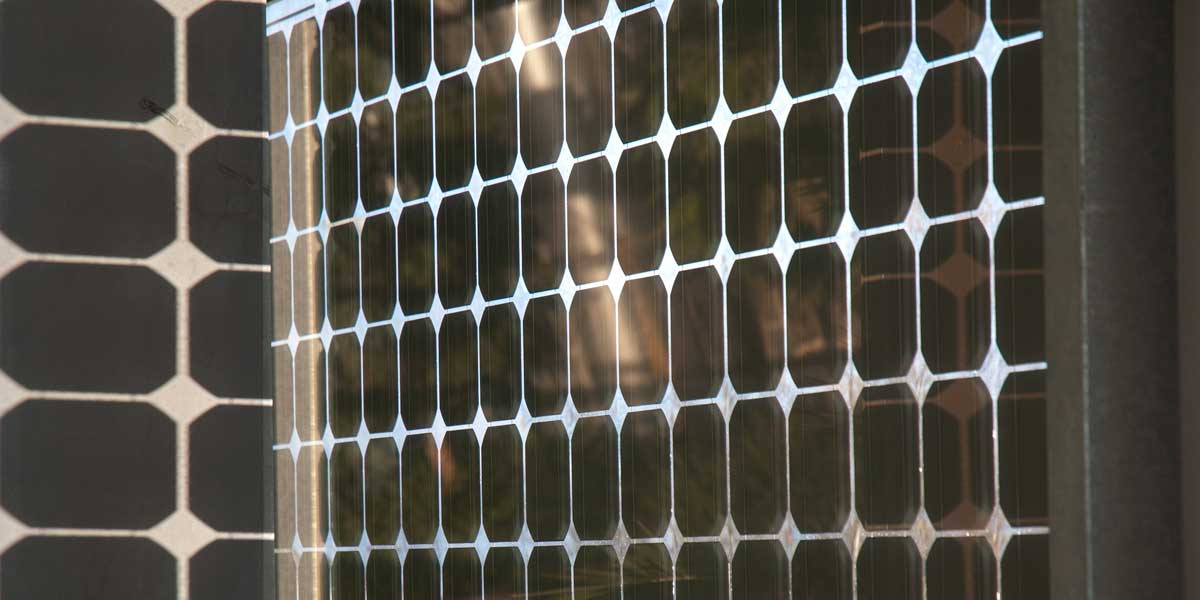
Morris explained that the main benefit he sees with plug-in solar is that consumers are taking greater control of their energy costs and becoming participants in the transition to clean energy. He views this as part of creating and maintaining a political consensus that supports the transition, which is good for everyone.
He also sees land-use benefits, with plug-in solar occupying otherwise unused spaces in yards and on roofs and balconies. His organization has calculated that widespread adoption of plug-in solar would meet about 2 percent of Germany’s electricity demand, which would reduce the need to build new power plants on undeveloped land.

Clean Energy Investment Hits $2.2 Trillion, Nearly Double Fossil Fuels
By
External Source
The IEA projects $2.2 trillion will flow into clean energy this year versus $1.2 trillion into fossil fuels, a nearly 2-to-1 split of total global energy spending.
Conflicts disrupting oil and gas supply chains, from Russia's invasion of Ukraine to the latest U.S. and Israeli military action, are pushing governments toward power sources that can't be embargoed.

Charging ahead: EVs outpace growth predictions
By
External Source
The global market for electric vehicles (EVs) is growing much faster than expected. In just six years, sales have increased tenfold, with around 21 million electric cars sold worldwide in 2025. China and Europe are leading the charge, but the market is growing rapidly in other parts of the world, too.

Donald Trump, Champion of Renewable Energy
By
External Source
The whole world now knows that relying on imported fossil fuels is a major economic and security risk. By contrast, the sun will shine and the wind blow whatever may be happening overseas. Renewables were already rapidly becoming cheaper than fossil fuels. Now it’s clear that they are also far safer. Thus Donald Trump has in practice become the world’s green energy champion.


24/7 renewables: The economics of firm solar and wind
By
External Source
The analysis shows that the cost of firm renewable electricity has declined rapidly across all major technologies and markets. In high-quality solar and wind resource regions, co-located hybrid systems can already deliver round-the-clock electricity at costs competitive with - and in many cases below - those of new fossil-fuel generation. China currently defines the global cost floor, while costs in Brazil, India, South Africa, Australia, and the Gulf region are declining rapidly towards fossil-fuel cost parity.

Wind and solar have saved UK from gas imports worth £1.7bn since Iran war began
By
External Source
The UK has avoided the need for gas imports worth £1.7bn since the start of the Iran war, as a result of record electricity generation from wind and solar, reveals Carbon Brief analysis.
The surge in wind and solar output is cutting the need for gas-fired generation, which has been nearly a third lower than last year and fell to record lows in both March and April 2026.
World’s Most Anticipated Vehicles of 2026: The EV That Fits Your Life
By
External Source
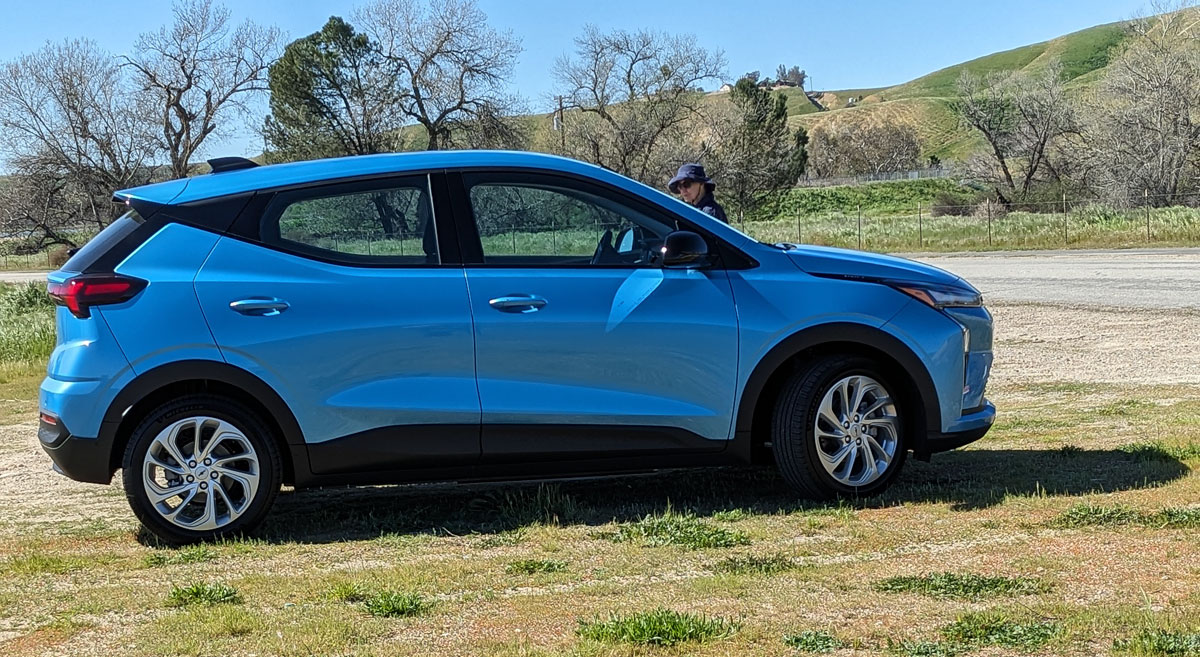
Paul Gipe had spent four decades studying and writing about the clean energy transition. As a renewable energy analyst and author, he will tell you there has never been a better time to own an electric car. When Chevrolet delivered his 2027 Bolt in February 2026, he approached it the same way he approaches everything: with data. (Note that this is a sponsored piece. I was not paid by anyone. My comments are from my web site.)

Electric vehicles pass tipping point, breaking the link with oil prices
By
External Source
The Hormuz crisis is a reminder of what concentrated energy dependence costs. The EV transition does not need it. The learning curve keeps falling, the platform keeps compounding, the economics keep improving. That is what makes this wave different.

NPR: How long do electric vehicle batteries actually last?
By
External Source
So how long do EV batteries last? It's still too soon to put a precise number on it, because — as a group — the cars already on the road haven't yet reached the end of the S-curve, the point when they will start to show massive performance declines. In other words, they're not dead yet. Meanwhile, battery technology keeps improving. The oldest EVs, like Hajjar's Model S, may not be the best indicator of how long newer EVs will last. Software systems to manage batteries have gotten more sophisticated. A lot of new EVs use a different battery chemistry — lithium iron phosphate or LFP — which lasts even longer than other lithium-ion batteries.

Paul Krugman: Renewable Energy and National Security–The wind and the sun don’t need to transit the Strait of Hormuz
By
External Source
Donald Trump’s attack on Iran will have many unintended and unforeseen consequences. One consequence even I wasn’t thinking about, but which is already clear after less than a week, is that Trump has made a strong new case for renewable energy. The usual argument for promoting solar and wind power is that relying on renewable energy avoids the environmental damage caused by burning fossil fuels. This environmental damage includes, but isn’t limited to, climate change. In addition, air pollution imposes shockingly large direct and immediate costs by harming our health and reducing our life expectancy.
But now we know that there is another reason for nations to reduce their dependence on fossil fuels: security. In a dangerous world, it’s infinitely safer to rely on the sun and the wind than to depend on fossil fuels that must be transported long distances, from nations that are untrustworthy, often exploitative and located in regions that frequently devolve into war zones. . . Donald Trump, hero of renewable energy? Who knew?
