News & Articles on Wind Energy
This is an archive of articles and news on both large and small wind turbines, wind energy & the environment, and links to topics on the history of wind energy.
I’ve been working with wind energy since 1976 and my professional experience in the subject runs the gamut from wind resource assessment to installing and testing small wind turbines. I continue to follow the industry and analyze its growth and increasing contribution to renewable electricity generation worldwide.
For newcomers to wind energy I’ve added pages from my previous books explaining terms used in the industry.
- 200 Term Multilingual Lexicon: The lexicon translates English terms into five different languages: Dansk, Deutsch, Español, Français, and Italiano.
- Glossary of Wind Energy Terminology: The glossary was written by Paul Gipe and Bill Canter in the late-1990s. I’ve added the glossary to my web site for both its historical content—many of the terms were in use during the 1980s and 1990s—and as a reference for the thousands of newcomers to the wind industry since it was first published.
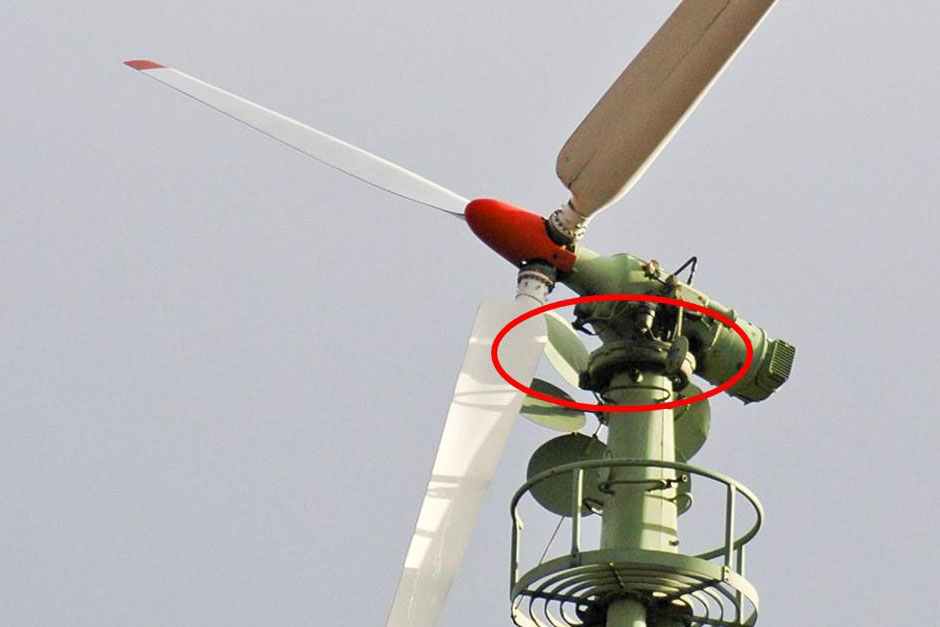
Pintles, Kingpins, & Slewing Rings: The Evolution of Yaw
By
Paul Gipe
While researching material for an article on the 100 kW Soviet wind turbine at Balaklava, Etienne Rogier sent me an …
Beyond the Blade: How Wind Energy Learned from Oil & Gas Failures–Why wind recycling won’t become the next abandoned well crisis
By
External Source
Oil and gas created a culture of extraction and externalization. Companies maximized short-term profits while socializing long-term environmental costs. The Texas legislation represents a belated attempt to address decades of inadequate oversight. Wind energy built sustainability into its business model. Financial assurance is standard practice. Near-complete recyclability is an industry goal, not a regulatory requirement. The Houston Chronicle’s investigative series on “zombie wells” reveals the full scope of oil and gas abandonment—wells that were supposed to be safely plugged but instead burst with toxic water, contaminating aquifers and costing taxpayers millions. Wind energy won’t have a zombie blade problem because the industry engineered responsibility into its DNA. When turbines reach end-of-life, they become raw materials for the next generation of clean energy infrastructure.

Testing the Dowsett Wind Turbine on the Isle of Man in the 1960s
By
Paul Gipe
Were there two wind turbines tested on South Barrule on the Isle of Man in the early 1960s, not just …

IEA: Renewables Will Be World’s Top Power Source “by 2026”
By
External Source
Renewable energy will overtake coal to become the world’s top source of electricity “by 2026 at the latest”, according to new forecasts from the International Energy Agency (IEA). The rise of renewables is being driven by extremely rapid growth in wind and solar output, which topped 4,000 terawatt hours (TWh) in 2024 and will pass 6,000TWh by 2026. Wind and solar are increasingly under attack from populist politicians on the right, such as US president Donald Trump and Reform in the UK. Nevertheless, they will together meet more than 90% of the increase in global electricity demand out to 2026, the IEA says, while modest growth for hydro power will add to renewables’ rise.

The Book Wind Energy Comes of Age Put in the Public Domain
By
Paul Gipe
Thirty years after its publication by John Wiley & Sons, I’ve put Wind Energy Comes of Age in the public domain. The digital copy of the more than 500-page book is now open access and is available for reading on line or it can be downloaded in its entirety for free. You can find the open access digital version here: Wind energy comes of age by Paul Gipe. Print copies can still be found at used bookstores or in university libraries.

Maetecnic or Guengrich Wind Turbine from the 1980s
By
Paul Gipe
A question arose from the international wind community about a photo on the late Peter Banner’s web site. This is …
