News & Articles on Fossil Fuels
Fossil Fuels ares not renewable, obviously. They are listed here for organizational reasons. I don’t write about fossil fuels–as a rule. However, fossil fuels and those who promote them are not going away quietly. Thus, I felt it necessary to include the topic to distinguish articles that are not about nuclear power or renewable energy.

Donald Trump: America’s Greatest EV Salesman
By
Jennifer Sensiba
Today’s spiking gasoline and diesel prices will push millions of people to seriously consider buying a new or used EV. When they do that, they’ll learn that they aren’t “soulless appliances.” Not only do they save money, but they’re more convenient if you can charge at home, and they have instant torque. They’re quieter, vibrate and shake less, and are generally just more pleasant to drive. In traffic, having access to one-pedal driving and HVAC without wasting gas idling make EVs the clear winner.

Paul Krugman: Renewable Energy and National Security–The wind and the sun don’t need to transit the Strait of Hormuz
By
External Source
Donald Trump’s attack on Iran will have many unintended and unforeseen consequences. One consequence even I wasn’t thinking about, but which is already clear after less than a week, is that Trump has made a strong new case for renewable energy. The usual argument for promoting solar and wind power is that relying on renewable energy avoids the environmental damage caused by burning fossil fuels. This environmental damage includes, but isn’t limited to, climate change. In addition, air pollution imposes shockingly large direct and immediate costs by harming our health and reducing our life expectancy. But now we know that there is another reason for nations to reduce their dependence on fossil fuels: security. In a dangerous world, it’s infinitely safer to rely on the sun and the wind than to depend on fossil fuels that must be transported long distances, from nations that are untrustworthy, often exploitative and located in regions that frequently devolve into war zones. . . Donald Trump, hero of renewable energy? Who knew?
Putin Tried to Freeze Ukraine. Instead, He Sparked an Energy Revolution.
By
Paul Hockenhos
n terms of a new, cutting-edge distributed energy system, Ukraine may be racing forward with the zeal of a new convert, but even the planned rollout of renewables in 2026 won’t keep most of the Ukrainian population safe from Russia’s depredations next winter. Wartime Ukraine has the will but not the financial resources to revamp its energy production on its own. The nation’s largest donor, the E.U., is already contributing nearly $200 billion to Ukraine’s budget for military expenditures and humanitarian aid, including energy. The speed with which Ukraine blankets its territory with distributed energy systems could make the difference between surviving another punishing winter—or succumbing to its cruelty.

Does clean energy generate too much waste? Hannah Ritchie checks the data on climate action
By
External Source
But when you put the numbers in context, the picture is clear: waste from green energy sources is better than the alternative. For example, when you burn coal, the leftover product becomes coal ash. Breaking down the data, Ritchie shows that coal generates 50 times more waste than solar power — and 500 times more than wind. Coal ash is also highly toxic. In the United States, some power plants may dispose of coal ash in surface ponds or landfills, or discharge it in waterways. Plus, the renewable energy waste problem may be solvable. Most parts of solar panels can be recycled, though countries need to invest in an efficient recycling system to make this happen.

Cold and expensive v hot, cheap and eco-friendly: the contrasting histories of home heating in the UK and Sweden
By
External Source
The new year in Sweden began with some record-breaking cold temperatures. Temperatures in the village of Kvikkjokk in the northern Swedish part of Lapland dropped to -43.6°C, the lowest recorded since records began in 1887. Yet for the majority of Swedish households, heating is not an issue. Those living in the multi-household apartment blocks that characterise Sweden’s towns and cities enjoy average temperatures of 22°C inside their homes, thanks to communal heating systems that keep room temperatures high and costs low. For many households, heating is charged at a flat rate and included in the rent they pay.

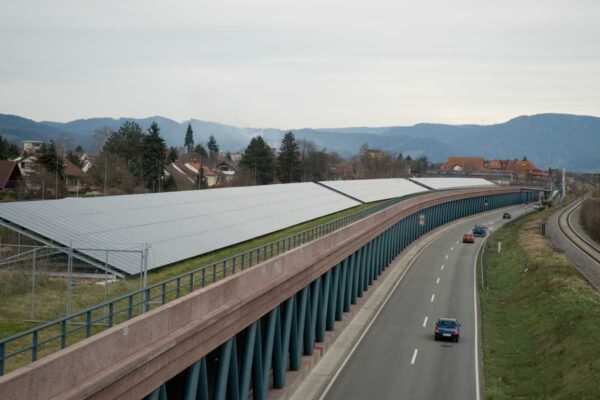
Turning Point: Wind and Solar Outstrip Fossil Fuels in Europe for First Time
By
External Source
Beatrice Petrovich at the Ember Energy Consultancy reports that for the first time last year, wind and solar generated more electricity in the European Union than did fossil fuels. It is another clear piece of proof that humanity can get to carbon neutral by 2050 if it wants to. The alternative is very bad for children and other living things. Combined, wind and solar generated 30% of EU power in 2025. That percentage was only 20% half a decade before. Wind, solar and hydro accounted for 47.1% of electricity generation, nearly half, in the Eurozone.
