News & Articles on Electric Vehicles
We’ve made great strides in moving the electricity sector toward renewable energy. However, transportation remains a major source of air pollution and global warming gases. If we are to make a transition to renewable energy, we will need to electrify as much of the economy as we can, including transportation. Electrified rail is one means, electric vehicles (EVs) are another. The focus here is mostly on our experience driving EVs. We’ve been driving electric since the fall of 2014.

Why We Chose a Nissan Leaf for Our EV
By
Paul Gipe
It was fairly simple really. Tesla was out. Too much money. At more than 100,000 the Tesla is well out …
Ollie’s Electric Car Pledge and Our Move to an EV
By
Paul Gipe
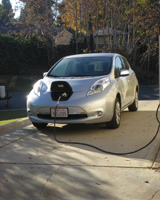
It worked. Ollie Danner’s Electric Car Pledge and his organizational skills are the reason we’re now driving an EV or …
US Air Force Unveils World’s Largest Electric Vehicle-to-Grid Fleet
By
Elisa Wood
The Los Angeles Air Force Base in California (LAAFB) has acquired 42 plug-in electric vehicles (PHEVs), the most the military has ever assembled in one place. The cars, trucks, vans and a bus will be able to supply 700 kW, enough to power 140 typical American homes on a hot summer afternoon.
The Economic Impact of Electric Vehicle Adoption in Ontario
By
Brent Kopperson
Not only do Electric Vehicles provide many environmental, health, energy, and cost saving advantages… EVs also have the potential to provide many economic, technological, and labour market gains in their production, operation, and construction of supporting infrastructure.
NYT: Coal Fades, So Electrics Get Cleaner
By
Paul Stenquist
The group says that the average battery-powered E.V. sold over the past year used 0.33 kilowatt-hours per mile, a 5 percent improvement over the 2011 data that was basis for the original report. Some are cleaner than the average. For example, the BMW i3 is rated at .27 kilowatt-hours per mile by the E.P.A.
How do EVs Compare with Gas-Powered Vehicles? Better Every Year….
By
Don Anair
No matter where you live in the U.S., an EV has lower global warming emissions than the average new compact car, which gets approximately 28 miles per gallon. Emission from EVs are poised for even further reductions, as national electricity data from 2011 and 2012 show a declining percentage of coal power while renewables like wind and solar are increasing.
