News & Articles on Electric Vehicles
We’ve made great strides in moving the electricity sector toward renewable energy. However, transportation remains a major source of air pollution and global warming gases. If we are to make a transition to renewable energy, we will need to electrify as much of the economy as we can, including transportation. Electrified rail is one means, electric vehicles (EVs) are another. The focus here is mostly on our experience driving EVs. We’ve been driving electric since the fall of 2014.

Charging an EV at Tehachapi’s Mountain Valley RV Park
By
Paul Gipe
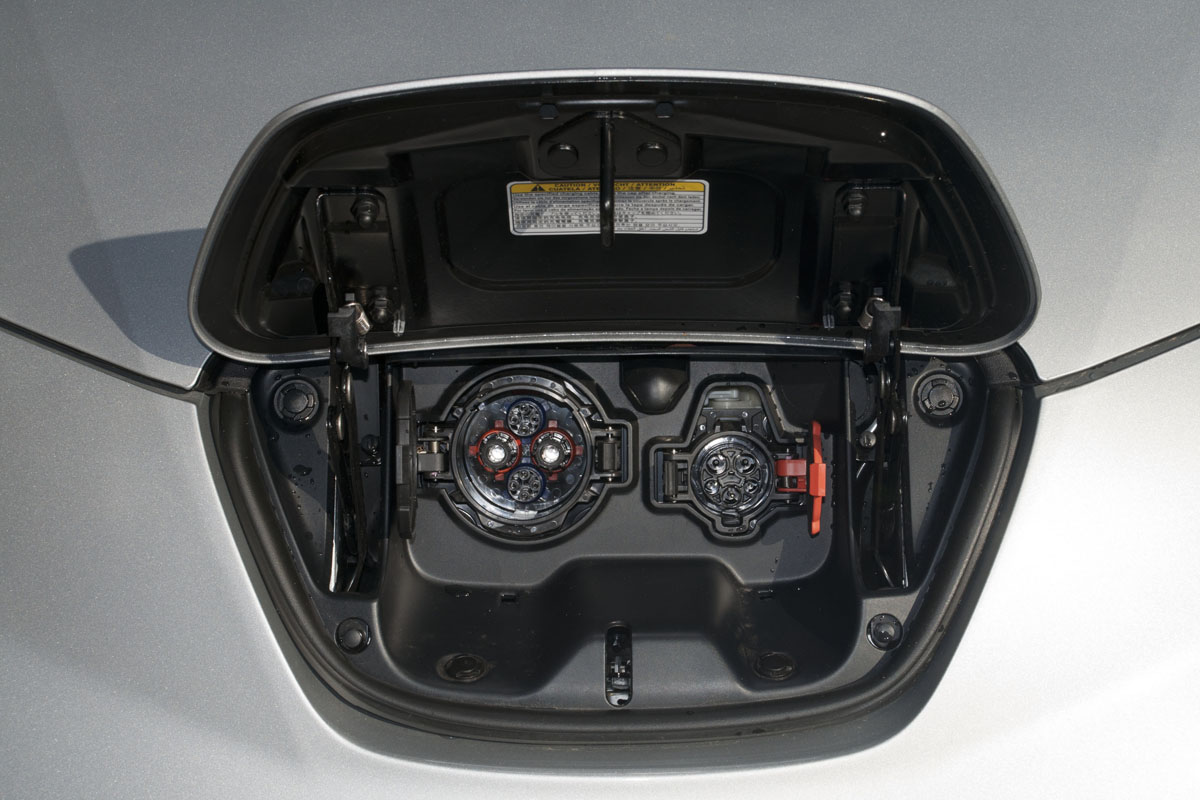
Recreational Vehicle (RV) parks with NEMA 14-50 receptacles are popular with drivers of Electric Vehicles (EVs) where no EV-specific chargers exist—as is the case between Bakersfield and Mojave, California. These outlets provide 240 volts at up to 40 amps of continuous current, equivalent to that from EV-specific chargers.
First Quick Charge–Wow That Was Fast
By
Paul Gipe
We’d have to agree with JP White in Nashville after his first quick charge: Awesome.

Electric Vehicle Charging Etiquette Hang Tags
By
Ollie Danner
The first ever Electric Vehicle Charging Etiquette Hang Tags. Great for busy charging locations. Reusable. Clear coating allows for multiple uses with dry erase marker.

Buying an Electric Vehicle Mail Order: Or Why we bought our Leaf from Petaluma and Not Bakersfield
By
Paul Gipe
Ok, it wasn’t quite mail order. Most of the transaction was done over the phone and via email, but we bought a car, an Electric Vehicle (EV), in a very untraditional manner.

Trip to Bird Springs Road in a Nissan Leaf
By
Paul Gipe
We’ve been driving our 2015 Nissan Leaf for two months now and it was time to take it on a road trip—a short one, mind you, but one long enough to test our range anxiety. We set out Monday morning to visit friends on Bird Springs Road, in the Sierra Nevada foothills east of Bakersfield. Of course that doesn’t tell one much about the route or the location.

Electric Vehicle Charging Stations or EVSEs
By
Paul Gipe
Electric Vehicles (EVs) are different from the cars we’re accustomed to. They use electricity stored in the traction batteries to power the vehicle. They don’t use gasoline or diesel fuel. As a consequence, true EVs–those vehicles that rely solely on batteries without “range extenders”–can’t use the existing network of gasoline stations and gasoline pumps to “refuel”.
