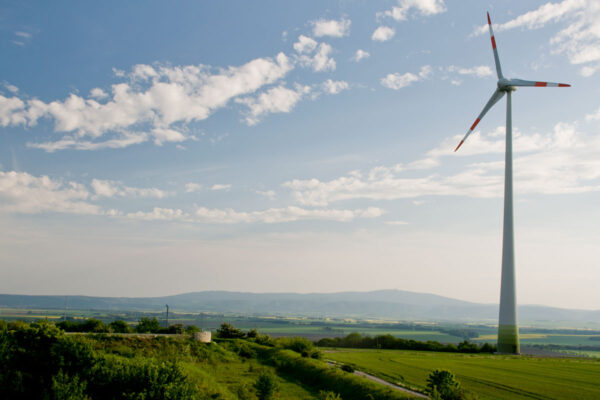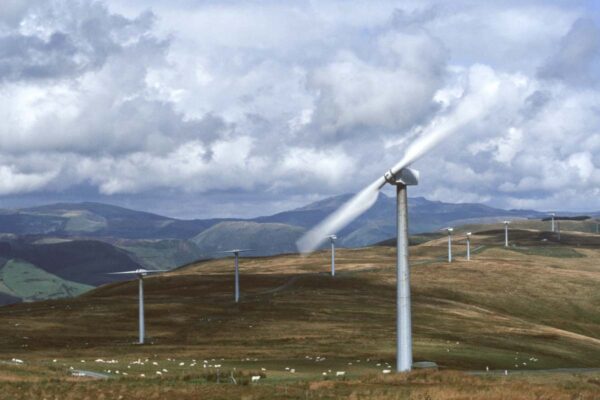
A modern windmill — or wind turbine, to be exact — is not so much a constructionthat invites affection or radiates pastoral comfort. Rather, it is something built out ofan urgent necessity — a need for a better means of generating electricity, an inventionmade to wean society away from polluting ourselves into oblivion.
News on Wind Energy
Last spring, tens of millions of people lost electricity across Spain, Portugal and part of France. Trains stopped in their tracks, and people were stuck in elevators, as southwestern Europe went without power for — in some cases — more than ten hours.
Immediately, the finger-pointing began. Many people blamed solar and wind energy. Spain, one of Europe’s front runners in renewable energy, gets about 46% of its power from solar and wind, according to the think tank Ember— sometimes more than 70%.
Oil and gas created a culture of extraction and externalization. Companies maximized short-term profits while socializing long-term environmental costs. The Texas legislation represents a belated attempt to address decades of inadequate oversight.
Wind energy built sustainability into its business model. Financial assurance is standard practice. Near-complete recyclability is an industry goal, not a regulatory requirement.
The Houston Chronicle’s investigative series on “zombie wells” reveals the full scope of oil and gas abandonment—wells that were supposed to be safely plugged but instead burst with toxic water, contaminating aquifers and costing taxpayers millions.
Wind energy won’t have a zombie blade problem because the industry engineered responsibility into its DNA. When turbines reach end-of-life, they become raw materials for the next generation of clean energy infrastructure.
Renewable energy will overtake coal to become the world’s top source of electricity “by 2026 at the latest”, according to new forecasts from the International Energy Agency (IEA).
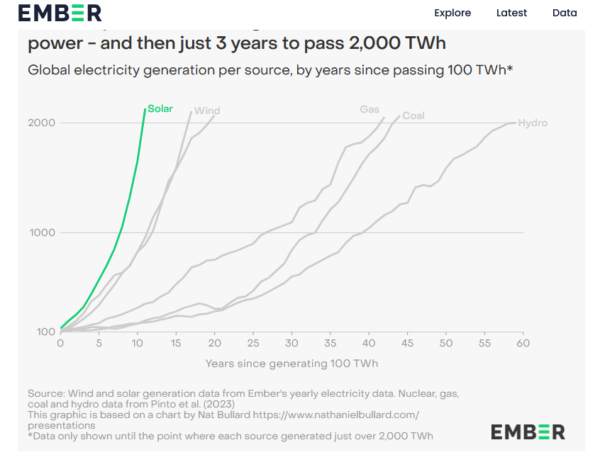
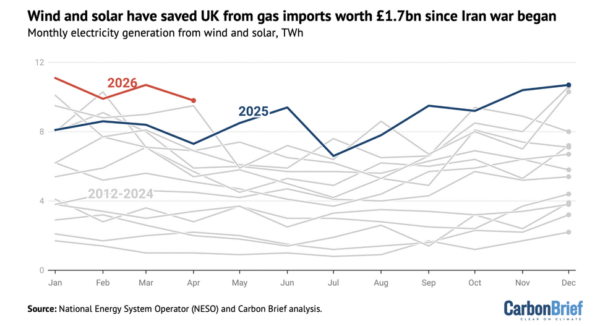
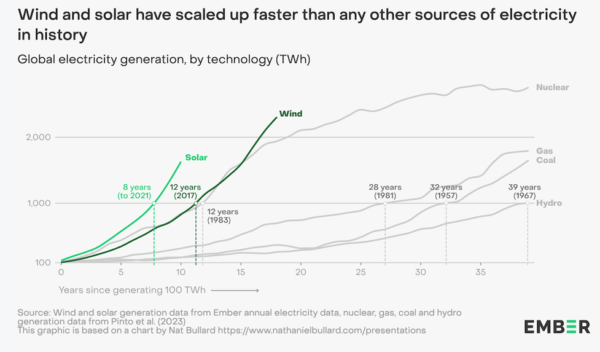
The rise of renewables is being driven by extremely rapid growth in wind and solar output, which topped 4,000 terawatt hours (TWh) in 2024 and will pass 6,000TWh by 2026.
Wind and solar are increasingly under attack from populist politicians on the right, such as US president Donald Trump and Reform in the UK.
Nevertheless, they will together meet more than 90% of the increase in global electricity demand out to 2026, the IEA says, while modest growth for hydro power will add to renewables’ rise.
Thirty years after its publication by John Wiley & Sons, I’ve put Wind Energy Comes of Age in the public domain. The digital copy of the more than 500-page book is now open access and is available for reading on line or it can be downloaded in its entirety for free.
You can find the open access digital version here: Wind energy comes of age by Paul Gipe.
Print copies can still be found at used bookstores or in university libraries.
The wind turbines visible from Donald Trump’s Turnberry and Menie golf courses have long enraged the president. At a press conference at his Ayrshire resort announcing a trade deal with the EU this weekend, Trump launched into an unprompted tirade against windfarms, instructing European countries to get rid of theirs. He was visiting Turnberry for the first time since the nearby onshore Kirk Hill windfarm began producing energy from eight turbines.
But were his comments about wind power correct?
This combination created atypically low wholesale electricity prices, with significant amounts of renewable energy being curtailed, but the blackout was not a renewable-energy-driven event.
Rather, it was the result of multiple layers of insufficient planning, inadequate voltage management, and poorly managed grid dynamics. 50% of the allocation of responsibility was to human failures in planning, 30% to legacy generation not performing as it was designed to do, and 20% to renewables exiting the system because they weren’t configured to deal with the scenario, once again a human failure more than a technology failure.
A cyclist was killed by falling wind turbine blade in Japan. To my knowledge this is the first case of … Read more
Solar and wind power are dominating new generation capacity around the world. This is to such an extent that, according to data from the International Renewable Energy Association (IRENA), 90 percent of the net increase in global electricity generation capacity came from wind or solar and 93 percent from renewable energy as a whole. Solar PV provided the lion’s share of this increase, at 72 percent, with wind providing 18 percent, fossil fuels 7 percent, hydro 2 percent, bioenergy 1 percent, and nuclear power less than 0.5 percent.