
While researching material for an article on the 100 kW Soviet wind turbine at Balaklava, Etienne Rogier sent me an … Read more
While researching material for an article on the 100 kW Soviet wind turbine at Balaklava, Etienne Rogier sent me an … Read more

Were there two wind turbines tested on South Barrule on the Isle of Man in the early 1960s, not just … Read more

Thirty years after its publication by John Wiley & Sons, I’ve put Wind Energy Comes of Age in the public domain. The digital copy of the more than 500-page book is now open access and is available for reading on line or it can be downloaded in its entirety for free.
You can find the open access digital version here: Wind energy comes of age by Paul Gipe.
Print copies can still be found at used bookstores or in university libraries.

A question arose from the international wind community about a photo on the late Peter Banner’s web site. This is … Read more
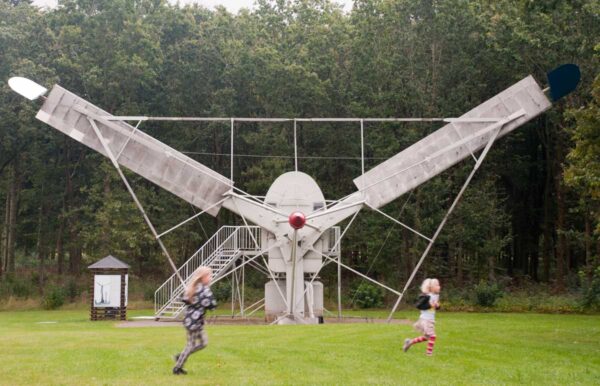
This exhibition focuses on the renewable resources of wind and waterpower. It charts a trajectory from the technologies used in … Read more

Anton Flettner’s rotor ship Buckau sailed across the North Sea in 1925 using two Flettner Rotors for propulsion. The event … Read more

The following was a question and answer session with Carl Wilcox during the 1973 Wind Energy Conversion Systems Workshop in Washington, DC.[1] Wilcox had been a member of the Smith-Putnam team.[2] Beauchamp Smith of the S. Morgan Smith Company also attended the conference and gave a presentation just before Mr Wilcox. The “COMMENT” below was likely by him as he addressed Mr. Wilcox as “Carl.”[3] There were other luminaries at this conference, including Ulrich Hütter,[4] Jean-Marc Noël,[5] and William (Bill) Heronemus.[6]

The annals of wind energy are filled with examples of arrogance, hubris, and hype about products that failed to deliver on their promoter’s promise. One long forgotten example is the Schachle wind turbine. However, unlike the Internet wonders that bedevil us today, the Schachle wind turbine was a real piece of hardware not merely electrons floating in the ether.

In 1932 British Pathé filmed a newsreel of the Soviet Union’s recently installed wind turbine at Balaklava near Yalta on … Read more

It was common knowledge on California wind farms in the 1980s that one way to stop the rotor from spinning out of control was to somehow get a rope tangled in the rotor. The rotor would then wind up the rope, wrapping it tightly around the main shaft, slowing the rotor if not stopping it. To get the rope into the rotor, it was necessary to shoot an arrow towards the rotor with a line attached. If successful, the spinning rotor would do the rest.

2023 © Wind-Works by Paul Gipe