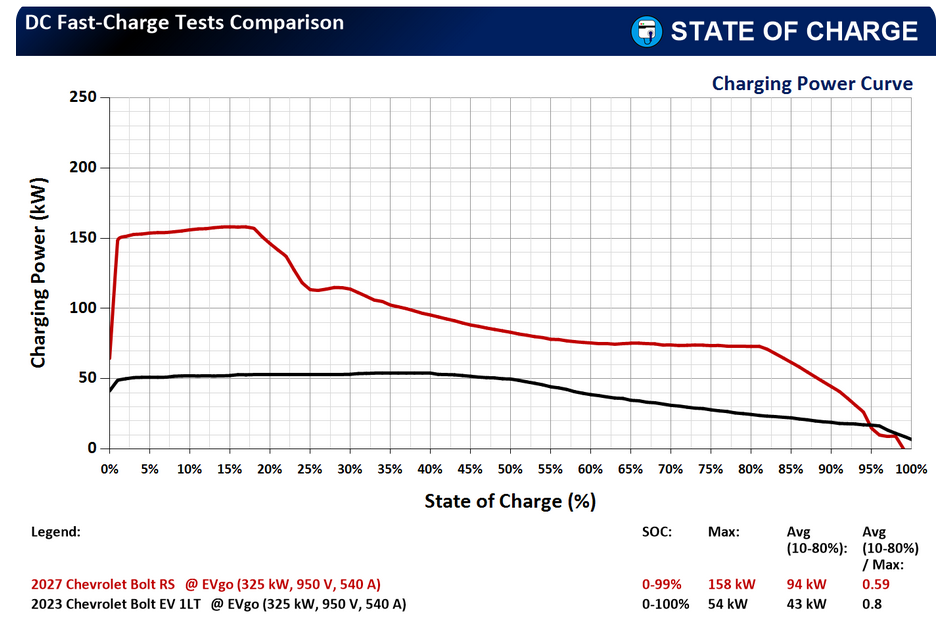
We just completed a 1,500 mile road trip to Oregon and back from Bakersfield, California. In comparison to the old days, it was a piece of cake. More DCFC choices and a better charging rate for the new Bolt made life so much simpler.
As is our wont, we stopped often, typically every one to two hours. In most cases, we barely had time to walk to the toilet and walk back before the car had reached its target charge level. Most stops required about 15 minutes, longer stops took about 30 minutes.
On occasion, while I fiddled with the route planning software for the next stop, we gained a few more kWh than planned.
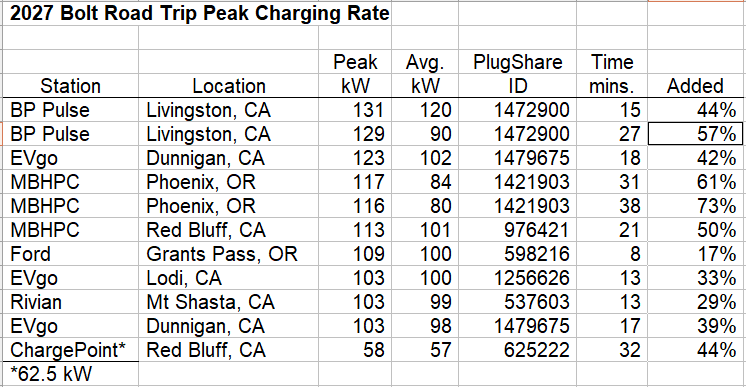
I tried to arrive at the charge stops in the lower third of the pack’s state-of-charge to maximize charging speed. The most I saw was a peak of 129-131 kW at BP Pulse’s Livingston, California station using Alpitronic’s hardware. The average power for those sessions was 90-120 kW. This was a far cry from the original Bolt’s dismal peak charge rate of 55 kW.
The “History” function on Chevy’s app provides a lot of detail that wasn’t available before.
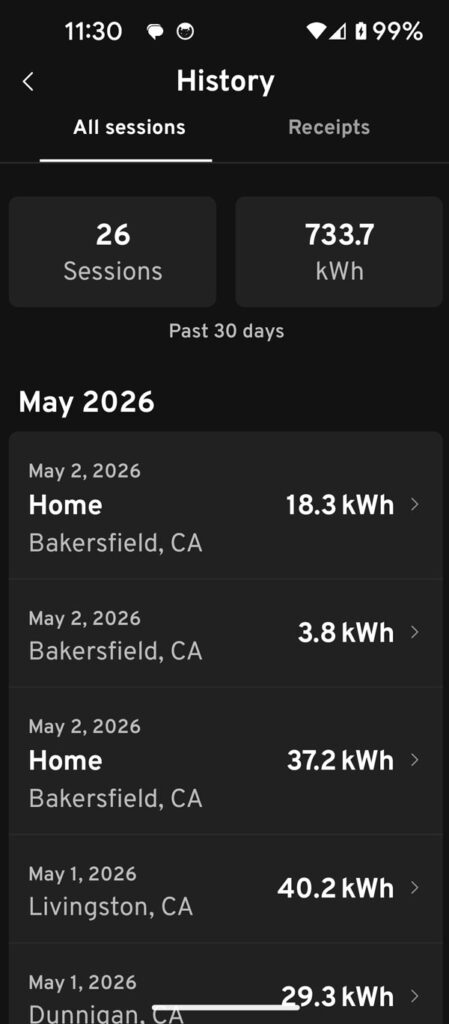
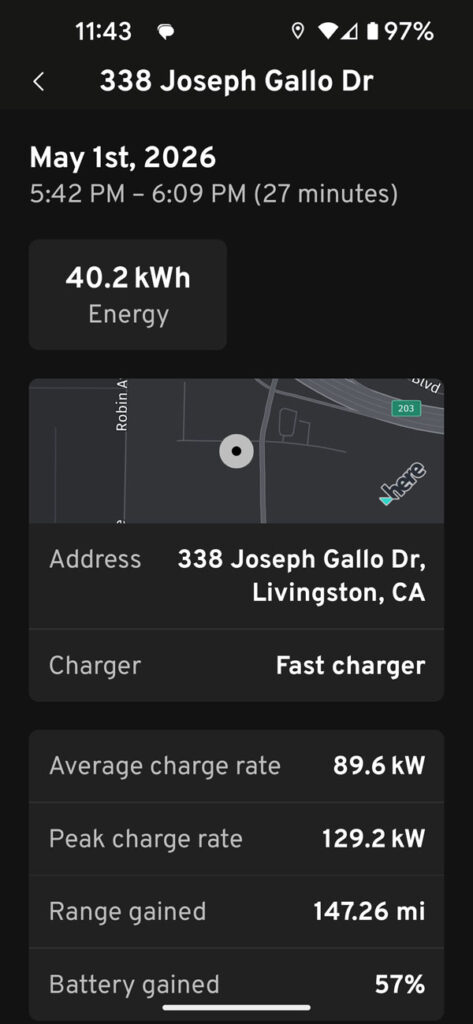
Here’s a summary for our trip.
Tom Moloughney has done a compete test of the new Bolt’s charging curve. See 2027 Chevrolet Bolt DC Fast-Charging Analysis: Huge Upgrade Over Old Bolt EV with Tom Moloughney and Mark Kane.